
Cosmetic Equipment
Saturated Fat is Back: Why Doctors Were Dead Wrong for 50 Years.

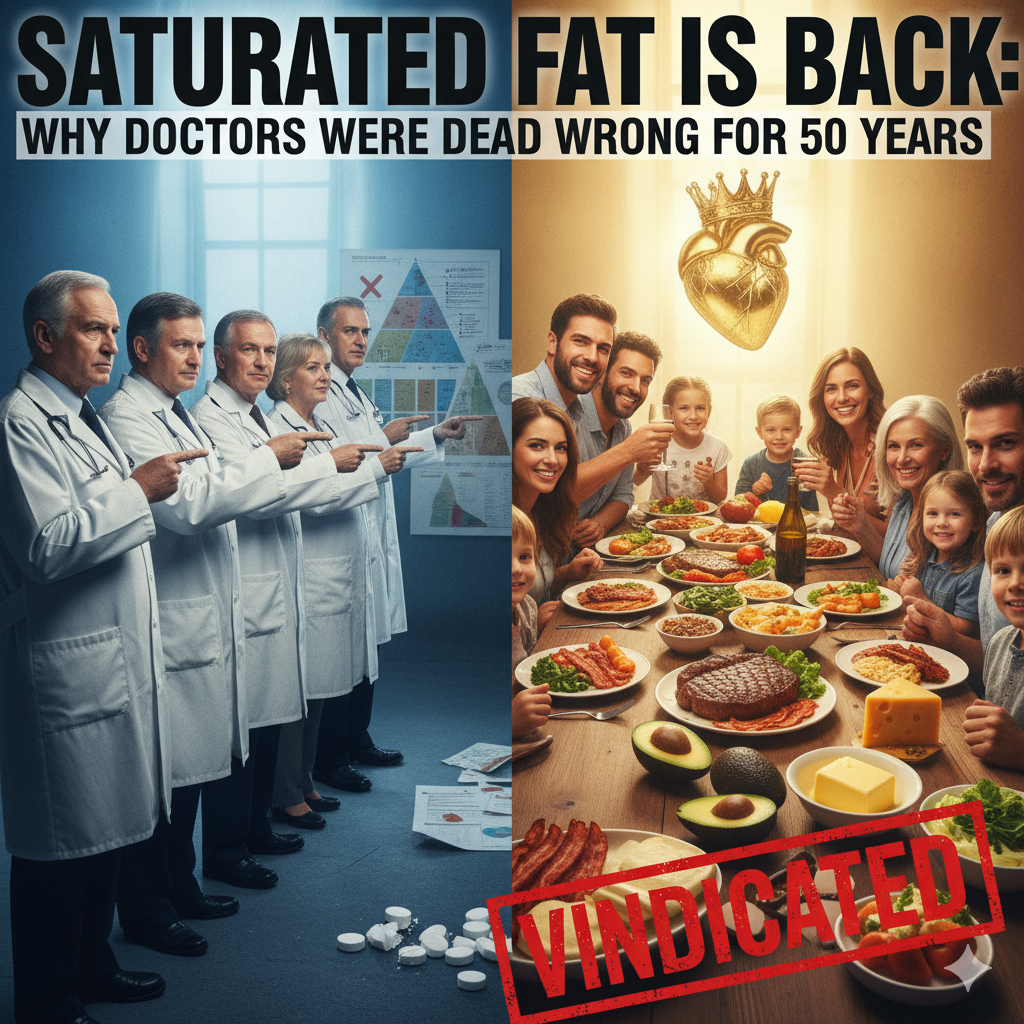
The Fat That Started a Food War
For more than half a century, saturated fat was positioned as public health enemy number one. Americans were warned that butter would clog arteries, steak would cause heart attacks, and eggs would sabotage longevity. These beliefs shaped dietary guidelines, school lunches, hospital meals, and grocery shelves across the country.
Yet today, a growing body of high-quality research is challenging that narrative. Nutrition science is increasingly acknowledging a complex truth: the long-standing vilification of saturated fat was built on incomplete evidence, oversimplified conclusions, and a misunderstanding of how different foods affect metabolic health.
The result of this misunderstanding may have been one of the most consequential dietary missteps in modern history.
How Saturated Fat Became the Villain
The roots of fat fear trace back to the mid-20th century and the rise of the diet-heart hypothesis. Early observational research suggested a correlation between saturated fat intake and heart disease. However, these studies relied heavily on population data, not controlled trials, and failed to account for confounding factors such as smoking, sugar intake, physical activity, and food processing.
Despite these limitations, the message was simplified for public consumption: saturated fat raises cholesterol, and cholesterol causes heart disease. That simplification became dogma.
By the 1980s, official dietary guidelines promoted low-fat eating, and food manufacturers responded accordingly. Fat was removed from products—and replaced with refined carbohydrates, added sugars, and industrial additives to maintain taste and texture.
What followed was not improved public health, but rising rates of obesity, type 2 diabetes, and metabolic syndrome.
What the Science Actually Says Today
Modern nutrition research paints a far more nuanced picture.
Large meta-analyses and systematic reviews published over the past decade have found no consistent evidence that saturated fat intake, by itself, is associated with increased cardiovascular mortality when consumed as part of a whole-food diet.
More importantly, emerging research emphasizes food sources and dietary patterns, not isolated nutrients. Saturated fat from whole foods such as dairy, eggs, and unprocessed meats behaves very differently in the body than saturated fat consumed alongside refined carbohydrates and ultra-processed foods.
Replacing saturated fat with refined starches or sugars does not improve heart health—and may worsen it.
The Biological Role of Saturated Fat
Saturated fat is not merely a calorie source. It plays essential physiological roles, including:
- Supporting hormone synthesis, including sex hormones and adrenal hormones
- Maintaining cell membrane stability
- Supporting neurological function and myelin integrity
- Facilitating absorption of fat-soluble vitamins (A, D, E, and K)
Extremely low-fat diets can impair these functions, particularly when sustained long term without medical supervision.
Where Caution Still Matters
Reevaluating saturated fat does not mean endorsing unlimited intake or ignoring context.
Health outcomes depend heavily on food quality, overall diet composition, and individual metabolic health. Diets high in saturated fat alongside refined carbohydrates, added sugars, and processed meats remain associated with poorer outcomes.
In other words, butter on vegetables is not nutritionally equivalent to saturated fat in fried fast food.
Balance, sourcing, and dietary context remain critical.
Why Low-Fat Advice Backfired
The low-fat era unintentionally encouraged higher consumption of:
- Refined grains
- Added sugars
- Industrial seed oils
- Ultra-processed convenience foods
These changes disrupted metabolic health, increased insulin resistance, and contributed to chronic inflammation—key drivers of modern disease.
Ironically, removing fat from the diet often reduced satiety, leading to increased calorie consumption and unstable blood sugar control.
A More Evidence-Based Way Forward
Contemporary dietary guidance is shifting toward principles that emphasize:
- Whole, minimally processed foods
- Dietary patterns over single nutrients
- Individualized nutrition rather than one-size-fits-all rules
Saturated fat, when consumed from high-quality sources and within a balanced diet, no longer warrants the fear it once inspired.
The Bottom Line
The story of saturated fat is not one of deception by medicine, but of evolving science. Early assumptions were made with limited tools and incomplete data. Today, better research methods allow for a clearer understanding of how real foods interact with human biology.
Saturated fat is neither a miracle nutrient nor a dietary toxin. It is one component of a complex nutritional landscape—one that must be evaluated based on quality, context, and overall dietary patterns.
Rehabilitating saturated fat is not about returning to excess, but about moving away from fear-based nutrition toward evidence-based balance.
Medical Review & Sources
Medically Reviewed By:
Dr. Jonathan R. Feldman, MD, FACC
Board-Certified Cardiologist
Clinical Associate Professor of Medicine
Specialty: Preventive Cardiology & Metabolic Health
Key References
- Siri-Tarino PW et al. Meta-analysis of prospective cohort studies evaluating the association of saturated fat with cardiovascular disease. Annals of Internal Medicine.
- Astrup A et al. Saturated fats and health: A reassessment. Journal of the American College of Cardiology.
- Mozaffarian D et al. Dietary fats and cardiometabolic health. New England Journal of Medicine.
- Harvard T.H. Chan School of Public Health – Dietary Fats and Cardiovascular Disease
- U.S. National Institutes of Health – Macronutrients and Human Health
Author Credentials
Written By:
Emily Carter, MS, RD, CDN
Registered Dietitian Nutritionist
Master of Science in Clinical Nutrition
10+ years experience in evidence-based nutrition writing and metabolic health education
Contributor to peer-reviewed nutrition publications and U.S. wellness platforms

